I recently wrote about why reading less can be preferable when you are already reading a lot. But if you only read occasionally, there are excellent reasons to read more.
Reading one book gives you a solution.
Reading more books gives you intuition.
If you read only occasionally (which is already great!), or if you read a book because it was recommended by someone at work, the risk is to want to apply what you’ve read immediately. You have found a solution.
For example, your manager recently read Turn the ship around (which is excellent!) and wants to apply its principles immediately. He explains that everyone will be expected to act as a leader from now on. I bet that you will not necessarily welcome the idea warmly. In my experience, people who cite books at work are rarely taken seriously. “Our environment is different” is a common reaction.
The solution is to read more. Reading is about developing your intuition on a topic by staying open-minded. If you love a book, read a different one with conflicting opinions. And repeat the process. You must always read books critically. You cannot do that if you read only occasionally. The more you read, the less attached you become to any single idea and the more people will trust your judgment.
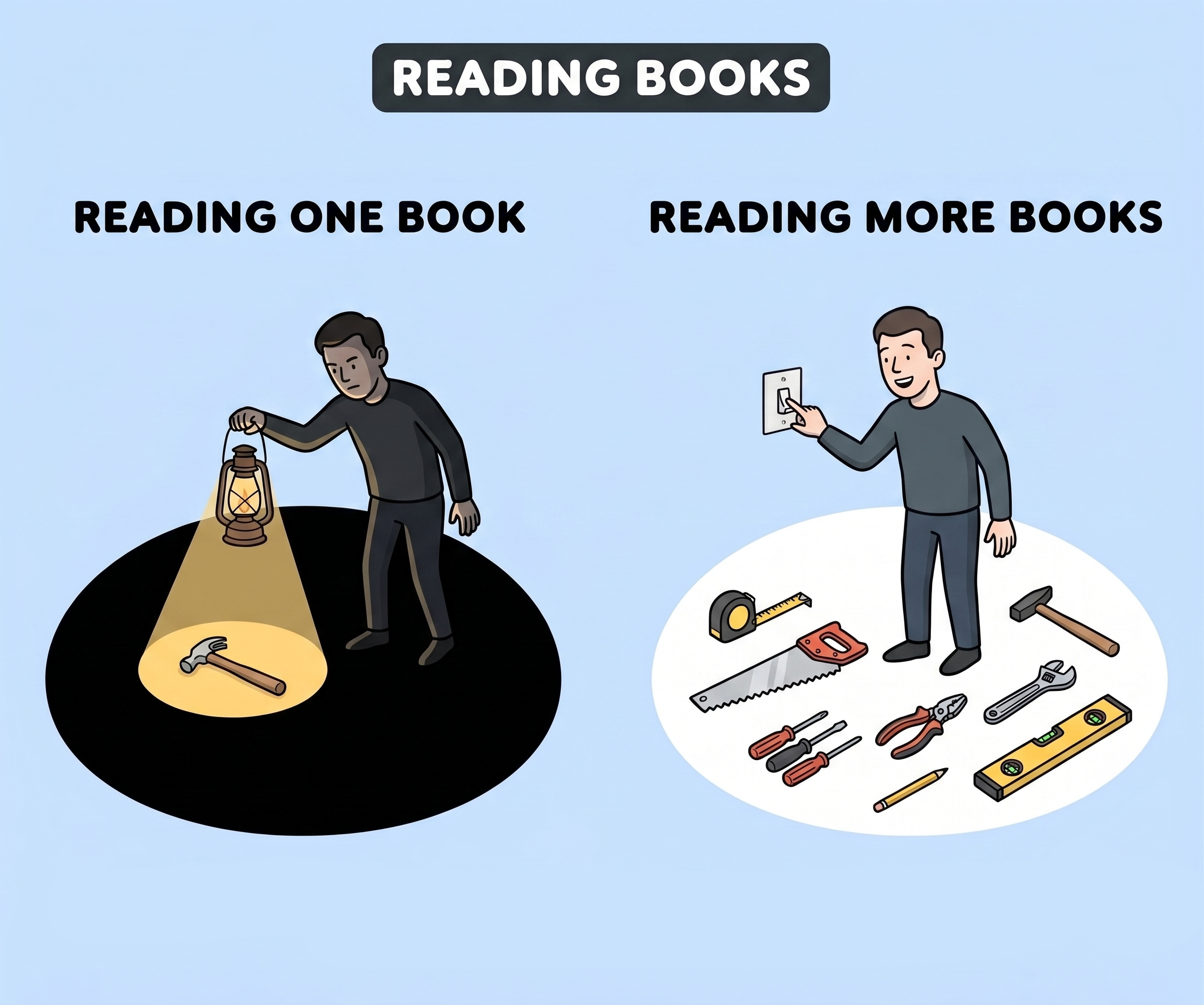
✓ The difference between reading a book and reading more books is the difference between knowing and thinking.
Reading one book solves known problems.
Reading more books solves unknown problems.
You decide to read a book to overcome a challenging task at work. That’s fine. The problem is no longer present. But what about all the opportunities you’re missing because you aren’t seeing the problem in the first place.
If you decide to read more, you will have the opportunity to explore random topics that you are barely familiar with. At work, but also in life. I discovered Stoicism without necessarily having a problem to solve (it’s just that I ignored that I needed those principles before reading). I discovered so much about mindfulness, creativity, and leadership. Reading more broadly expands your horizon and helps you discover what truly resonates with you, what you really care about even when you don’t know it.
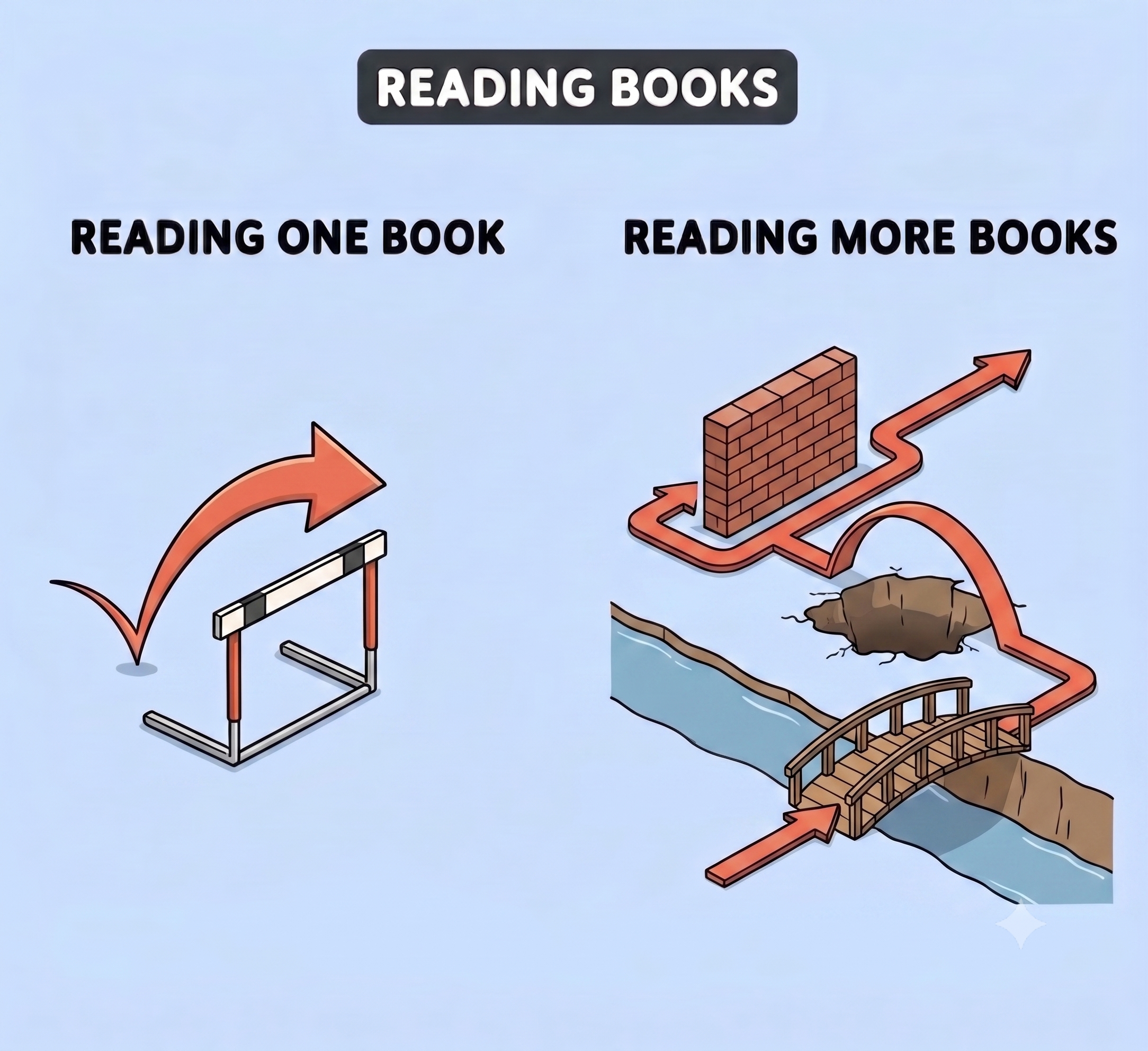
✓ The difference between reading a book and reading more books is the difference between overcoming an obstacle and navigating between obstacles.
Reading one book exposes new information.
Reading more books retains existing information.
A single reading rarely changes how you think, even if you take notes. You will find memorable ideas, but you will forget most of what you read. When reading more books, you will revisit the same ideas in different contexts. Books form a giant web of interconnected ideas. The same idea is expressed differently, in different contexts, by different authors. Rereading is great to slowly absorb them. Over time, the best ideas stop feeling like ideas you’ve read and start feeling like part of how you think.
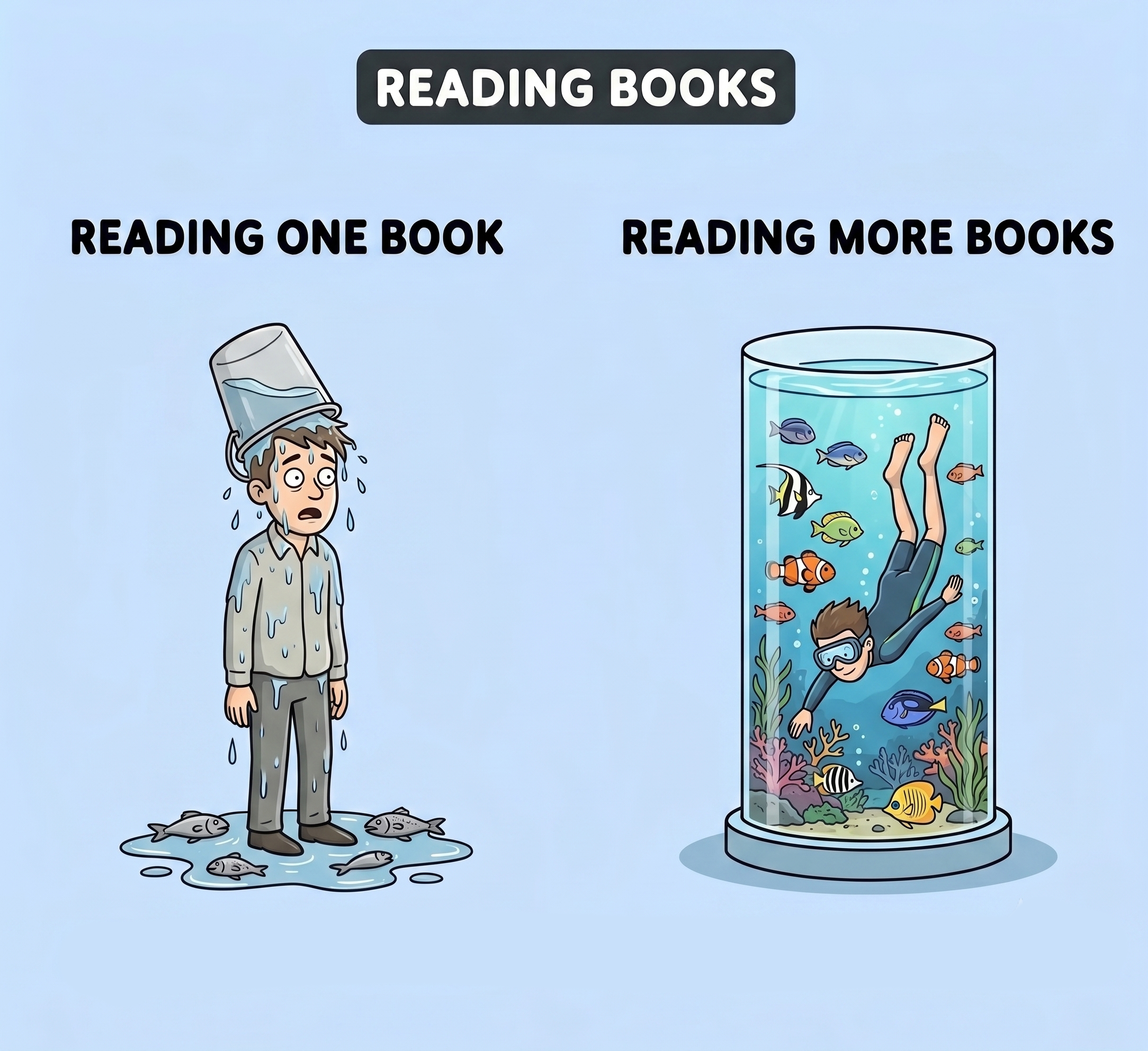
✓ The difference between reading a book and reading more books is the difference between exposing yourself to new information and absorbing it.
One Last Word
The benefits of reading compound with the number of books that you read. If reading too many books is not a solution, reading not enough prevents access to the biggest benefits of reading. This is one of those things that is best appreciated by living it. Not convinced? What if you take the challenge to read 25 books in the coming year to prove me wrong.

About the author
Julien Sobczak works as a software developer for Scaleway, a French cloud provider. He is a passionate reader who likes to see the world differently to measure the extent of his ignorance. His main areas of interest are productivity (doing less and better), human potential, and everything that contributes in being a better person (including a better dad and a better developer).
Read Full Profile