Don’t just accept the world you inherit today. Don’t just accept the status quo. No big challenge has ever been solved, and no lasting improvement has ever been achieved, unless people dare to try something different. — Tim Cook
Differences don’t make us indifferent. From childhood, we learn to notice differences, between species, in nature, and in everything we observe.
Everyone agrees you cannot make a huge difference without doing things differently. But daring to act differently is not easy. We are programmed to comply with others (our primitive selves don’t want to feel rejected) and (too often) we default to what others expect from us.
In this post, I want to illustrate how doing things differently is not just important, but the only way to a fulfilling life. But before diving into the argument, let’s take inspiration from short stories of creative people who aren’t afraid to act differently:
- Paulo Coelho, author of The Alchemist, one of the best-selling books of all time, pirated his own books on torrent sites because he didn’t have a marketing budget and it was the easiest way to drive sales in hard-to-reach regions.
- Yves Chouinard, founder of Patagonia, gave away his $3 billion company to a nonprofit organization.1
- What to say about Tim Ferriss… He experimented so much! He won a Kickboxing Championship by analyzing the rulebook to find loopholes and win by ignoring traditional kickboxing techniques completely. He also fired his customers who generated the most administrative work. He travelled with a cooking kit to practice in hotel rooms. And he tried to work only 4 hours per week as explained in his bestseller.
- Umberto Eco, author of The Name of the Rose, filled his house with 35,000 books to build what he called his antilibrary, a daily reminder of what he ignored.
- Oliver Emberton, a web developer, decided to use a screen reader for one week while blindfolded to experience how a blind user navigates a website.2
- Mark Manson challenged himself to read fifty nonfiction books in fifty days, and then did it.
- Shaun Tan, who defines himself as a writer of illustrated books for no particular audience, gave an interview only in drawings.3
- Charles Darwin, while being seasick, decided to embark on The Beagle to travel the world and uncover the mysteries of evolution.
- Christopher Slayton, at age 18, created black holes, stars and galaxies in Minecraft. His video went viral (22 millions of views!).
The previous list presents just a few random examples. It’s very easy to find inspiration. Since I decided to write a post on this subject (a few years ago), I’ve learned to notice how common differences are.
Why Acting Differently Is Hard
No one grows up saying I want to do the same thing everyone else is doing. And yet there is a comfort to surrounding yourself with people who agree with you, or who are doing the same thing you’re doing. […] If you do what everyone else does, you’ll get the same results that everyone else gets. Best practices aren’t the best. By definition, they’re average. ― Shane Parrish, writer
We often appreciate what others dare to do differently such as the secrets behind extraordinary performance: the training program of great athletes, the habits of top performers, or the routines of prolific artists. But if we are interested in how these people decided to act differently, it’s mostly to try to do… the same thing. And if enough people reason similarly, the difference becomes the new norm, and following the norm is a safe strategy to get… normal results. The real question you must ask instead is what could YOU do differently? When was the last time you decided to trust your intuition?
For sure, deviating from common practices can be painful. Who wants to try something different that might not work? Who wants to look like a fool because of it? Once you realize that everyone else is doing the same thing, you know it’s time to try something new.
Why Acting Differently Is Easy
The world isn’t waiting for more of the same. — Rick Rubin
Inside each person is a combination of DNA that has never existed before and never will exist again. You already have in you everything you need to act differently. And you have a single lifetime to try to do it. The more you will learn about who you are, the more opportunities you will have to act differently.
How to Act Differently
What is great about doing things differently is that you are free to do what you want. In this section, I give a small number of strategies but feel free to ignore everything and just do what you think must be done.
Strategy: Master, Differently
Learn the rules like a pro, so you can break them like an artist — Pablo Picasso
Ignoring what others have done before is rarely a good idea. For example, most authors use an engaging tone with an active voice and short sentences. Writing a book using dull, passive, complex sentences to be different would just be stupid. The goal is instead to master common recipes to know which rule can be relaxed. Doing things differently doesn’t mean reinventing everything. You could just introduce a small difference that makes THE difference.
Strategy: Observe, Differently
You’re more likely to unlock a big leap in performance by trying differently than by trying harder. You might be able to work 10% harder, but a different approach might work 10x better. — James Clear
By noticing what others do differently, we become more inclined to act differently too. Therefore, don’t just be amazed by incredible achievements, but try to understand why. The extraordinary is often ordinary people doing extraordinary actions or doing ordinary actions over an extraordinary period of time.
Strategy: Copy, Differently
It’s impossible to imitate another artist’s point of view. We can only swim in the same waters. So feel free to copy the works that inspire you on the road to finding your own voice. It’s a time-tested tradition. — Rick Rubin, The Creative Act
You are different and trying to replicate perfectly what someone else does is impossible. “We’re imperfect mirrors,” said Derek Sivers, “Like a funhouse mirror that distorts what it reflects, your imitation will turn out quite different from the original. Maybe even better.” Find inspiration in the work of others.
Strategy: Mix Up, Differently
The Beatles were inspired by American rock and roll, artists like Chuck Berry and the Shirelles. But when they played, it was different. It wasn’t different because they wanted it to be so. It was different because they were different. And the world responded. — Rick Rubin, The Creative Act
Combining common things is a powerful way to act differently. A study revealed that Nobel Prize-winning scientists are nearly three times more likely to have an artistic hobby than the average person.4 Similarly, it’s easier to become an expert at the intersection of multiple fields than to become an expert in a single field, as coined by Scott Adams as the “talent stack.” Instead of trying to be in the top 1% of the world in a single domain like winning an Olympic gold medal, just become very good at two or more things using dedicated practice. Scott Adams became famous with his comic strip Dilbert by combining his knowledge of art, business, and humor without being a top performer in any of those fields.
There are many more ways to apply that strategy. For example, your passion for two unrelated topics may help you see things in a new light. You may read the same books that millions have read before you, the unique combination (and the order in which you read them) will create unexplored connections leading to unique insights. Just stay open-minded and let your brain do the work.
Strategy: Play, Differently
The creative adult is the child who survived. — Ursula K. Le Guin
Allow yourself to be silly. I bet you weren’t as serious when you were younger. I’m pretty sure you were not afraid to try new things as you are now. Nature invented play to make us learn. When you play, you don’t care about the outcome, or about being wrong. Play creates the perfect environment to act differently.
Strategy: Wait, Differently
Like bamboo, you must show nothing to the outside world for a long time, while you are building a strong, extensive root system. Then, when the time is right, you will shoot up, seemingly overnight. — Ping Fu
Sometimes, doing nothing is enough to do things differently. Don’t subscribe to the latest social network. Don’t watch the new popular streaming TV series.
Sometimes, doing the same thing is enough to do things differently if you decide to wait a little longer. In Helsinki, bus lines often follow the same path for the first stops. If you have the patience to continue your journey, you may end up where few travelers explore before you.5
Strategy: Think, Differently
Whenever you find yourself on the side of the majority, it’s time to pause and reflect. — Mark Twain
Being in the minority doesn’t mean believing that the Earth is flat and persuading others that’s true. Being in the minority means accepting not being in the majority. George S. Patton famously said: “If everyone is thinking alike, then somebody isn’t thinking.” Be that person. Thinking differently doesn’t mean being wrong. Not so long ago, the majority believed that the Earth was flat. Then, it was believed to be round when we now know that Earth is not perfectly spherical. A truth is often a lie waiting for a better truth to emerge, waiting for someone to think differently.
When I Act Differently
Sometimes acting differently is doing what is science-backed but not widely applied in practice:
- I have used flashcards for more than a decade. Flashcards help make information stick for a long time, and as such, you can’t expect to understand their benefits immediately. Few people rely on flashcards, and even if AI makes information so easily accessible, I continue to slowly fill my brain.
- I run in barefoot shoes without really being convinced that’s a great idea. Sometimes, we just need to trust our intuition.
Sometimes acting differently is doing what has always been done in history but is no longer prevalent for wrong reasons;
- I read nonfiction books, which was a common activity not so long ago, but with the rise of media platforms such as YouTube, I rarely find people who read at least one book per year…
- I take notes. I’m slowly building my commonplace book. I use writing as a thinking tool (my best tool!). I even built my own note-taking tool to design my custom-tailored creative process.
- I value my time more than money. Seneca already urged people to live their life two thousand years ago and I’m convinced that dying humans eventually realize money and fame could not replace quality moments with family and friends.
Sometimes acting differently is just not doing certain things:
- I don’t use any social media applications. I only browse LinkedIn when looking for professional opportunities or to be so amazingly impressed by the incredible work everybody seems to do…
- I never watch TV series when they are first released. The most “popular” ones that everyone is talking about are often quickly forgotten just a few months later, meaning they weren’t that great.
- I try to limit my consumption of news articles and read books on important topics instead. This helps me better understand society’s problems (pandemic, war, etc.) without rereading the same thing, again and again (and again).
Sometimes acting differently is focusing on what others don’t:
- I ignore the hype around frameworks to focus mostly on emerging paradigms (TDD, containers, AI). I’ve always been more interested in understanding how things work under the hood than having a new skill to put on my resume. I value timeless principles more than ephemeral technologies.
- I value skills more than I value my job title. I’ve never played the game of the corporate ladder. I’m convinced that accepting more responsibility in a company with a broken culture is not proof of your competence but the opposite.
Sometimes acting differently is just having fun:
- I don’t focus on performance when practicing my hobbies, such as running or playing table tennis.
- I track my habits using LEGO tiles that are slowly revealing the world map.
Raising kids is also a wonderful opportunity to experiment:
- I read thousands of picture books to find great ones to share with my sons. I don’t simply want my kids to be able to read. I want them to love books. As a parent, what I can teach them is so limited compared to what they will be able to learn by themselves if they grow up as curious creatures.
- I printed more than 100 additional instructions of LEGO models to build using the LEGO Classic box (which comes with only 15 models to build) to show my kids that imagination is their only limit.
- I tried to go out with kids every day, even during Winter months despite their grandmothers claiming they will get sick (they don’t). I am unable to say how many kilometers I traveled with them in the baby carrier but I can confidently say that I didn’t see many parents enjoying the magic hour with their kids.
To sum up
Acting differently doesn’t mean doing completely different things.
Often, you just have to trust your intuition and be comfortable being in the minority. Sometimes, you will have to trust yourself and do what you think has never been tried before. You are literally unique. Nobody like you has ever walked the Earth before. You must act differently, not to be different, but to reveal who you are. Acting differently is just about being you.
It is better to fail in originality than to succeed in imitation. — Herman Melville
In a world where IA will get better at generating similar things, you have no choice but to become an outlier, doing things differently. Being great is no longer enough if it isn’t original…
If nobody else does what you do, you won’t need a resume. — Kevin Kelly
Footnotes
-
https://www.nytimes.com/2022/09/14/climate/patagonia-climate-philanthropy-chouinard.html ↩
-
https://medium.com/silktide/things-i-learned-by-pretending-to-be-blind-for-a-week-bf7b09f33eb4 ↩
-
https://www.spiegel.de/international/zeitgeist/an-interview-without-words-illustrator-shaun-tan-draws-conclusions-a-769089.html ↩
-
https://www.theguardian.com/lifeandstyle/2013/feb/23/change-life-helsinki-bus-station-theory ↩
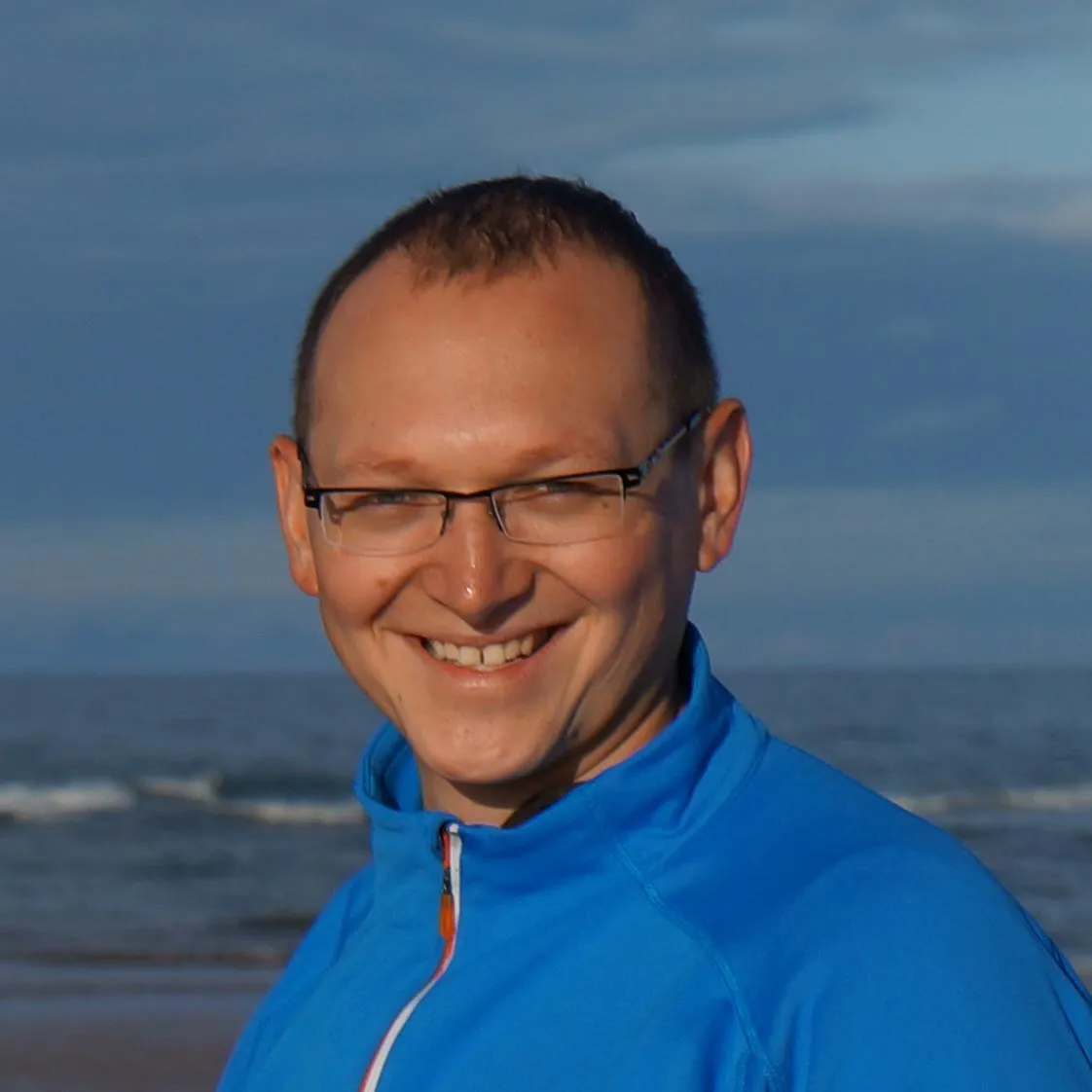
About the author
Julien Sobczak works as a software developer for Scaleway, a French cloud provider. He is a passionate reader who likes to see the world differently to measure the extent of his ignorance. His main areas of interest are productivity (doing less and better), human potential, and everything that contributes in being a better person (including a better dad and a better developer).
Read Full Profile