I’m always interested in discovering great books except that … great books don’t exist. Great books are just good books that resonate for personal reasons. Only YOU can turn good books into YOUR great books.
What makes a good book?
If you read regularly, it’s relatively easy to differentiate a not-so-good book (to not say bad…) from a good one, despite the worst books still receiving some 5-star reviews, often because the book was delivered on time… 🙃 (Delivery employees have a strong impact on Amazon reviews!)
Good books…
-
… Preserve your time. Good books must have been edited for a very long time to make them shorter without any confusing jargon. Some repetitions are sometimes valuable. Key ideas must be emphasized and a few repetitions deliberately chosen by the author are useful. Repetitions from a careless author that forgot the last chapter are not acceptable. Authors must treat readers’ time as the most precious resource. For example, before Writing Atomic Habits1, James Clear analyzed the structure and the title of books that sold millions copies to learn how to keep the reader engaged2. Good books are worth every minute of your time.
-
…Have a long history. If preserving your time is important, good books are often the results of several years (or decades) of hard work – researching, rewriting the content one more time … and one more time, finding a publisher after countless refusals. Jared Diamond conducted roughly 20 years of research before publishing Guns, Germs, and Steel3 when Susan Cain dedicated seven years in the making of her book Quiet4. Good books compress an author’s years into a reader’s hours.
-
… Feel like an intimate conversation. Being interrupted while reading must bother you in the same way as while talking. Good books let you experience profound conversations like when a vulnerable Tara Westover in Educated5 retold her painful journey towards education. Good books are also an opportunity to converse with history, like when listening to Victor Frankl6 explaining how losing hope killed so many persons in concentration camps or when reading the personal notes of Roman emperor Marcus Aurelius7. Good books are intimate conversations across time.
-
… Make you think. Good books don’t just provide answers. They capture human or nature complexity without oversimplifying it. They acknowledge counterarguments and limitations. They are invitations to make you question, think and draw your own conclusions. In Four Thousand Weeks8 Oliver Burkeman forces us to face the uncomfortable truth about our limited time. Similarly, reading Amusing Ourselves to Death9 by Neil Postman left me with little practical advice but continues to haunt me several years later. Good books challenge how you think (and live).
-
… Encourage action. Good books must be a call for action like replacing a long-time detrimental habit, reevaluating your life experiences under a new light to move on and grow. It’s no surprise the book Atomic Habits by James Clear has topped the New York Times best-seller list for more than 300 weeks. Reading is essential to challenging yourself to behave differently. A book such as The Subtle Art of Not Giving a F*ck10 helped millions of readers care more about a few things and refocus their life. Good books provide the seeds you need to grow.
-
… Have an audience of one. Good books weren’t written with success in mind. Their authors know intimately that they had to do it, often for themselves first. When Susan Cain decided to write a book on introversion11 in a world that cannot stop talking, It may not have been obvious it could become a #1 New York Times bestseller. She was mostly eager to learn more about herself. When Benjamin Hoff decided to introduce readers to Taoist principles12 using the voices of Winnie of Pooh characters, it’s hard to imagine that that decision was motivated with success in mind, even if reading the first pages is enough to understand that the book deserves it. Good books are creative works.
-
… Became successful with word-of-mouth. Many of the best books were rejected by (almost) all publishers. The 4-Hour Workweek by Tim Ferris was rejected by 25 publishers before selling millions of copies. Moby-Dick by Herman Melville was a complete commercial failure and went out of print during the author’s lifetime, A Confederacy of Dunces by John Kennedy Toole was posthumously awarded the Pulitzer Prize for fiction twelve years after the author killed himself because he couldn’t get his book published. Marketing can buy instant best-sellers but only word-of-mouth creates long-lasting successes that define the best books. Sapiens by Yuval Noah Harari was quietly released outside Israel three years after his original publication and got the attention it deserves only three years later. Good books take time to be recognized as such.
This list is not exhaustive. There are more reasons why a book is a good book but you get the idea.
A writer turns a book into a good one by putting a lot of himself in the writing: his long-lasting passion, his years of study, his creativity, his patience, his stubbornness when his editor wants to make the book less opinionated, and so on.
What turns a good book into a great book?
Only good books have the potential to turn into a great book. Stopping the reading of a bad book is often great advice – an advice that I’m still struggling to apply. Since there are so many good books with the potential to become great ones, spending our limited time with bad books is not serious.
Good books need you to become great. Great books are all about you:
- Your personality. Reading Quiet by Susan Cain for an introvert will be experienced like reading his own personal diary, when extroverts will still find the book instructive but not life-changing.
- Your emotions. Reading Man’s Search for Meaning by Viktor Frankl where the author explains that meaning can be found even in suffering, will be experienced differently if you are depressed or living your best life.
- Your problems. Reading Good Inside13 by Becky Kennedy during the terrible twos of your first child we feel like a godsend, especially if you have the conviction that most advice parents give you is more often wrong than right.
- Your mistakes. Reading The Obstacle Is the Way14 by Ryan Holiday will not have the same impact if you have already faced some of life’s challenges than if you are still too young and think everything will be alright.
- Your doubts. Reading From Strength to Strength15 by Arthur C. Brooks before your midlife will seem like a stupid idea whereas reading this same book after having chased meaningless successes in your career will give you a new hope.
- Your values. Reading Essentialism16 by Greg McKeown about pursuing less will resonate differently if you are tired of living in a society that wants more.
- Your philosophy. Reading any book about Stoicism if you are religious will provide conflictual answers and principles to questions you do not even ask.
- You, you, you
Great books are therefore indissociable of you, in particular the you that are currently reading the book. Who you are when starting a book determines which books will become your great ones that you will cherish. In practice, great books…
- … Provide immediate relevance. When facing a tough problem (I mean when living…), encountering a new idea, an insight, or a principle that helps you see your current situation under a new light is priceless. A great book seems written specifically for you.
- … Provide emotional resonance. When facing difficult moments (I mean when living too…), finding a book that touches you emotionally by matching or influencing your current values, fears, or aspirations is priceless too. A great book is not read but lived.
- … Provide different perspectives. When having a strong opinion (I mean when being human…), finding a book that helps you see the world from a different viewpoint is invaluable. An obstacle that seemed hopeless now seems approachable. A great book makes you see what you couldn’t before.
This list is no more exhaustive than the previous ones.
A reader turns a book into a great one by putting a lot of himself in the reading: his past experiences, his emotions, his struggles, his doubts, and so on.
So, what are great books finally?
Great books are the result of an author and a reader that both decide to present themselves as they are and discover together they share something in common.
As we have more in common than differences that oppose us, many great books are shared by a lot of readers. We are basically machines that generate and react to the same emotions, regardless of where you live. Therefore, even if I’m the only one that can turn a good book into a great one, I will continue to listen to your great books. Here are mine:
- On Work
- Creativity, Inc., by Ed Catmull, 2014
- Difficult Conversations, by Stone, Heen, Patton, 1999
- Freedom, Inc, by Getz, Carney, 2009
- From Strength to Strength, by Arthur C. Brooks, 2022
- How Big Things Get Done, by Bent Flyvbjerg, Dan Gardner, 2023
- It Doesn’t Have to Be Crazy at Work, by Jason Fried, David Heinemeier Hansson, 2018
- Measure What Matters, by John Doerr, 2018
- Nine Lies About Work, by Marcus Buckingham, Ashley Goodall, 2019
- No Rules Rules, by Reed Hastings, Erin Meyer, 2020
- Out of the Crisis, by W. Edwards Deming, 1982
- Slow Productivity, by Cal Newport, 2024
- Spiral Dynamics, by Don Beck, Christopher Cowan, 1996
- Start With Why, by Simon Sinek, 2009
- The One Thing, by Gary Keller, Jay Papasan, 2013
- Trillion Dollar Coach, by Eric Schmidt, Jonathan Rosenberg, Alan Eagle, 2019
- Turn the Ship Around!, by L. David Marquet, 2013
- On Parenting
- Die with Zero, by Bill Perkins, 2020
- Good Inside, by Becky Kennedy, 2022
- How to Raise Kids That Aren’t Assholes, by Melinda Wenner Moyer, 2021
- Hunt, Gather, Parent, by Michaeleen Doucleff, 2021
- Les lois naturelles de l’enfant, by Céline Alvarez, 2016
- On Programming
- A Pattern Language, by Christopher Alexander et al., 1977
- Agile Estimating and Planning, by Mike Cohn, 2005
- Code: The Hidden Language, by Charles Petzold, 1999
- Designing Data-Intensive Applications, by Martin Kleppmann, 2017
- Domain-driven Design, by Eric Evans, 2003
- How Google Tests Software, by James Whittaker, Jason Arbon, Jeff Carollo, 2012
- Humans Vs Computers, by Gojko Adzic, 2017
- Java Concurrency in Practice, by Brian Goetz et al., 2006
- Java Puzzlers, by Joshua Bloch, Neal Gafter, 2005
- Refactoring, by Martin Fowler, 1999
- Site Reliability Engineering, by Betsy Beyer, Chris Jones, Jennifer Petoff, Niall Richard Murphy, 2016
- Structure and Interpretation of Computer Programs, by Harold Abelson, Gerald Jay Sussman, 1985
- Systems Performance, by Brendan Gregg, 2013
- The Software Architect Elevator, by Gregor Hohpe, 2020
- On Learning
- A Mind for Numbers, by Barbara Oakley, 2014
- Educated, by Tara Westover, 2018
- Grit, by Angela Duckworth, 2016
- Mindset, by Carol S. Dweck, 2006
- Moonwalking with Einstein, by Joshua Foer, 2011
- Peak, by Anders Ericsson, Robert Pool, 2016
- Range, by David Epstein, 2019
- The Art of Learning, by Josh Waitzkin, 2007
- Ultralearning, by Scott H. Young, 2019
- Understanding Understanding, by Richard Saul Wurman, 2017
- On Being
- Clear Thinking, by Shane Parrish, 2023
- Don’t Believe Everything You Think, by Joseph Nguyen, 2022
- Ego is the Enemy, by Ryan Holiday, 2016
- Excellent Advice for Living, by Kevin Kelly, 2023
- Hell Yeah or No, by Derek Sivers, 2020
- Humor, Seriously, by Jennifer Aaker, Naomi Bagdonas, 2021
- Man’s Search for Meaning, by Viktor Frankl, 1946
- Meditations, by Marcus Aurelius, c. 180
- Quiet, by Susan Cain, 2012
- Think Like a Monk, by Jay Shetty, 2020
- Thinking, Fast and Slow, by Daniel Kahneman, 2011
- Tribe of Mentors, by Tim Ferriss, 2017
- On Doing
- Amusing Ourselves to Death, by Neil Postman, 1985
- Atomic Habits, by James Clear, 2018
- Designing Your Life, by Bill Burnett, Dave Evans, 2016
- Four Thousand Weeks, by Oliver Burkeman, 2021
- The Let Them Theory, by Mel Robbins, 2024
- The Art of Making Memories, by Meik Wiking, 2019
- The Courage to Be Disliked, by Ichiro Kishimi, Fumitake Koga, 2013
- On Writing
- Building a Second Brain, by Tiago Forte, 2022
- How to Take Smart Notes, by Sönke Ahrens, 2017
- On Reading: Provocations, consolations and suggestions for reading more freely, by Nick Parker, 2020
- On Writing Well, by William Zinsser, 1976
- Several Short Sentences About Writing, by Verlyn Klinkenborg, 2012
- The Creative Act, by Rick Rubin, 2023
- The Elements of Style, by William Strunk Jr., E. B. White, 1918
- The War of Art, by Steven Pressfield, 2002
- On something else 😀
- Anticancer, by David Servan-Schreiber, 2007
- Born to Run, by Christopher McDougall, 2009
- Maus, by Art Spiegelman, 1991
- Le Petit Prince, by Antoine de Saint-Exupéry, 1943
- Sapiens, by Yuval Noah Harari, 2011
- Steal Like an Artist, by Austin Kleon, 2012
- The Design of Everyday Things, by Don Norman, 1988
- The Psychology of Money & The Art of Spending Money, by Morgan Housel, 2020
- The Tao of Pooh, by Benjamin Hoff, 1982
Footnotes
-
Clear, James. Atomic Habits: An Easy & Proven Way to Build Good Habits & Break Bad Ones. New York, Penguin Publishing Group, 16 Oct. 2018. ↩
-
Story shared during an episode of The Tim Ferriss Show podcast https://tim.blog/2023/01/06/james-clear-atomic-habits/ ↩
-
Diamond, Jared M. Guns, Germs and Steel : A Short History of Everybody for the Last 13,000 Years. London, Vintage, 1997. ↩
-
Cain, Susan. Quiet : The Power of Introverts in a World That Can’t Stop Talking. New York, Broadway Books, 2013. ↩
-
Westover, Tara. Educated: A Memoir. New York, Random House, 2018. ↩
-
Frankl, Viktor. Man’s Search for Meaning. Pocket, 1946. ↩
-
Aurelius, Marcus. Meditations. Translated by Gregory Hays, New York, Modern Library, 6 May 2003. ↩
-
Burkeman, Oliver. Four Thousand Weeks. Farrar, Straus and Giroux, 10 Aug. 2021. ↩
-
Postman, Neil. Amusing Ourselves to Death: Public Discourse in the Age of Showbusiness. London, Methuen, 1985. ↩
-
Manson, Mark. The Subtle Art of Not Giving a F*Ck : A Counterintuitive Approach to Living a Good Life. New York, HarperOne, an imprint of HarperCollins Publishers, 13 Sept. 2016. ↩
-
Cain, Susan. Quiet : The Power of Introverts in a World That Can’t Stop Talking. New York, Broadway Books, 2013. ↩
-
Hoff, Benjamin. The Tao of Pooh. Dutton, 1982. ↩
-
Kennedy, Becky. Good inside: A Guide to Becoming the Parent You Want to Be. S.L., Harperwave, 2022. ↩
-
Holiday, Ryan. The Obstacle Is the Way: The Timeless Art of Turning Trials into Triumph. New York, Portfolio/Penguin, 2014. ↩
-
Brooks, Arthur. From Strength to Strength: Finding Success, Happiness, and Deep Purpose in the Second Half of Life. S.L., Portfolio Penguin, 2021. ↩
-
Greg Mckeown. Essentialism: The Disciplined Pursuit of Less. London, Virgin Books, 2014. ↩
About the author
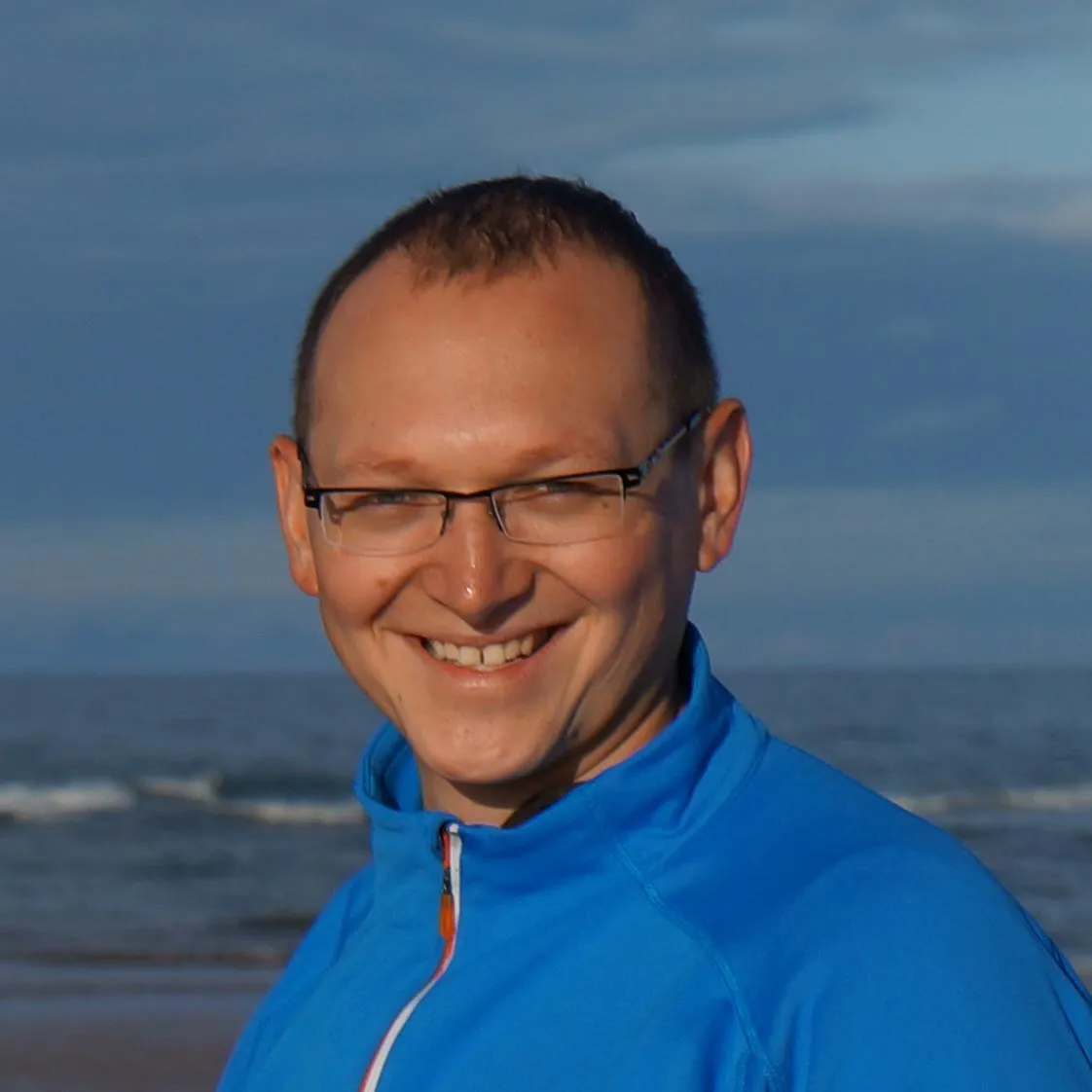
Julien Sobczak works as a software developer for Scaleway, a French cloud provider. He is a passionate reader who likes to see the world differently to measure the extent of his ignorance. His main areas of interest are productivity (doing less and better), human potential, and everything that contributes in being a better person (including a better dad and a better developer).
Read Full Profile